
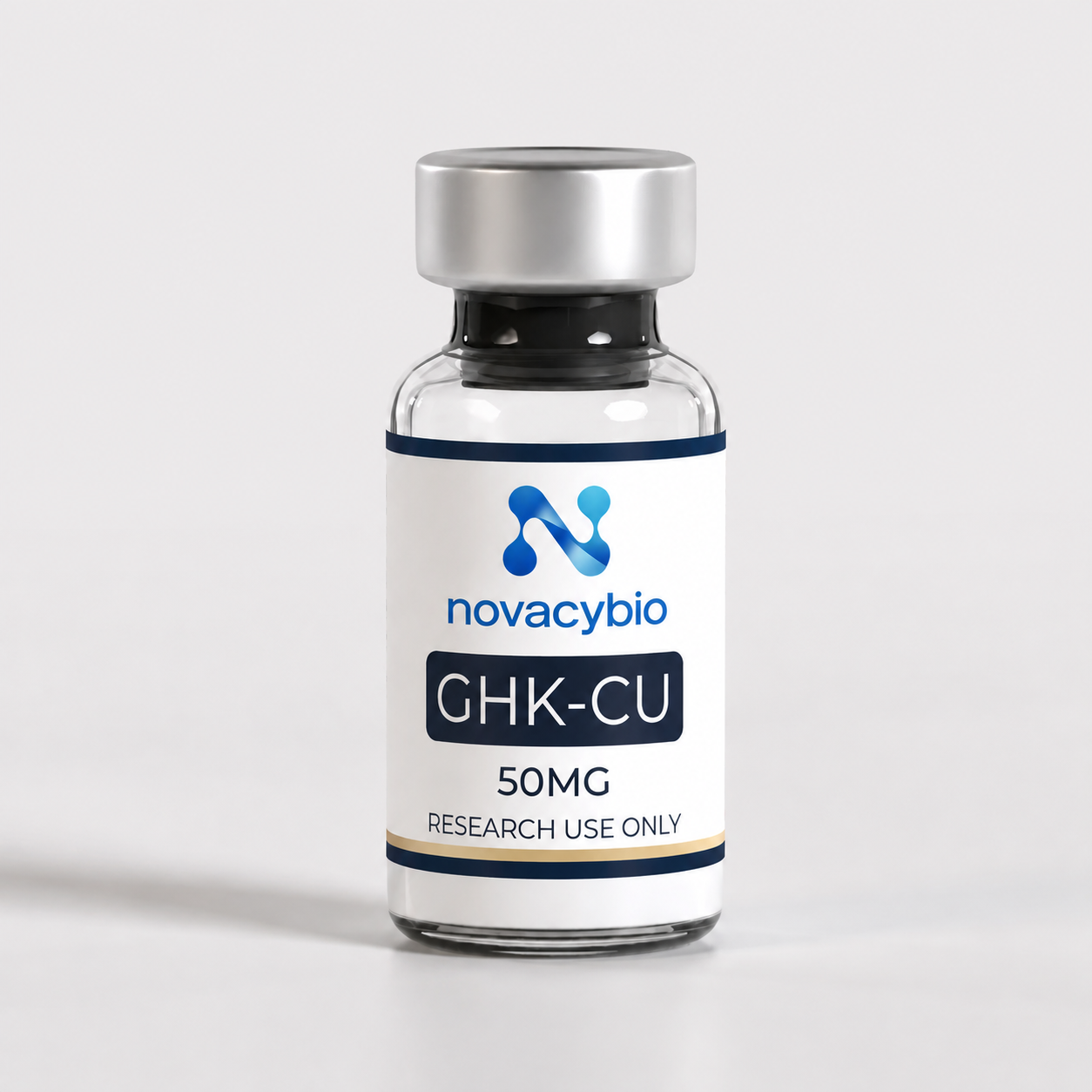
GHK-Cu
原价为:$49.99。$39.99当前价格为:$39.99。
High Purity GHK-Cu Copper Peptide | Laboratory Research Use Only | Lyophilized Powder
GHK-Cu Research Peptide | Synthetic Copper Peptide for Laboratory Research
1. Product Introduction
GHK-Cu Research Peptide is a synthetic copper-binding peptide complex widely studied in biochemical and molecular research. Also known as Copper Tripeptide-1, GHK-Cu consists of the naturally occurring tripeptide sequence Gly-His-Lys (GHK) combined with a copper ion (Cu²⁺).
As a Synthetic Peptide used in Laboratory Research, GHK-Cu has attracted scientific interest due to its unique peptide structure, copper-binding characteristics, and role in experimental studies involving cellular pathways, extracellular matrix components, and molecular signaling mechanisms.
GHK-Cu research materials are commonly utilized by laboratories investigating peptide chemistry, protein interactions, copper-dependent biological processes, and cellular response pathways.
This Research Peptide is supplied exclusively for controlled laboratory applications, including analytical testing, biochemical investigation, and academic research.
2. Quality Highlights
Our GHK-Cu peptide is manufactured and tested according to research-grade quality standards.
✓ High Purity
Produced using controlled peptide synthesis processes with high-purity specifications.
✓ HPLC Testing
Each batch undergoes analytical verification using High-Performance Liquid Chromatography (HPLC).
✓ COA Available
Certificate of Analysis (COA) documentation is available for batch-specific quality verification.
✓ Research Grade
Designed for laboratory research applications requiring reliable peptide material.
✓ Quality Verification
Each production batch is evaluated through analytical testing procedures to confirm identity, purity, and consistency.
3. Technical Overview
Molecular Characteristics
GHK-Cu is a copper peptide complex formed between the tripeptide Glycyl-L-Histidyl-L-Lysine (GHK) and copper ions.
The peptide belongs to the class of synthetic bioactive peptides studied for its copper-binding properties and molecular interactions.
Key characteristics include:
- Short-chain tripeptide structure
- Copper ion coordination capability
- Defined amino acid sequence
- Stable peptide-copper complex formation
- Compatibility with biochemical research workflows
Peptide Structure
GHK-Cu contains three amino acids:
- Glycine (Gly)
- Histidine (His)
- Lysine (Lys)
The histidine residue contributes to copper coordination, forming a peptide-metal complex commonly investigated in molecular and biochemical studies.
Research Background
GHK-Cu has been examined in scientific literature for decades as a model copper peptide system.
Current laboratory research areas include:
- Peptide-metal interactions
- Copper transport mechanisms
- Extracellular matrix-related studies
- Cellular signaling investigations
- Molecular biology research
GHK-Cu provides researchers with a standardized peptide compound for studying copper-associated biochemical processes.
4. Product Specifications
| Specification | Details |
|---|---|
| Product Name | GHK-Cu |
| Category | Research Peptide |
| Type | Synthetic Copper Peptide |
| Purity | ≥99% (HPLC Tested) |
| CAS Number | 89030-95-5 |
| Molecular Weight | 401.92 g/mol |
| Molecular Formula | C14H24CuN6O4 |
| Appearance | Blue Lyophilized Powder |
| Form | Freeze-Dried Peptide Powder |
| Sequence | Gly-His-Lys-Cu |
| Storage | Store in a cool, dry environment; protect from light |
Specifications may vary slightly depending on analytical testing methods and production batches.
5. Research Applications
Cellular Research
GHK-Cu is frequently studied in laboratory environments investigating:
- Cellular signaling pathways
- Peptide-cell interaction models
- Protein expression research
- Cell culture research systems
Researchers use GHK-Cu as a reference compound for exploring peptide-mediated cellular responses.
Molecular Biology Research
GHK-Cu is utilized in molecular biology studies involving:
- Gene expression analysis
- Molecular pathway investigation
- Peptide-protein interaction studies
- Cellular communication mechanisms
It serves as a research tool for evaluating molecular responses under controlled experimental conditions.
Copper Binding and Metal Complex Research
Due to its copper coordination properties, GHK-Cu is studied in:
- Peptide-metal chemistry
- Copper-binding mechanism research
- Metalloprotein-related investigations
- Biochemical interaction studies
Extracellular Matrix Research
Laboratory studies frequently investigate GHK-Cu within research models related to:
- Collagen-associated molecular pathways
- Extracellular matrix components
- Structural protein research
- Tissue biology research models
Analytical and Biochemical Research
GHK-Cu can be used as a reference material for:
- Analytical chemistry studies
- Peptide characterization
- Mass spectrometry research
- Chromatographic analysis
6. Quality Documentation
Certificate of Analysis (COA)
Each batch of GHK-Cu Research Peptide can be accompanied by analytical documentation including:
- Product identification
- Batch number
- Purity testing results
- Analytical specifications
- Quality assessment data
HPLC Analysis
High-Performance Liquid Chromatography (HPLC) testing is used to evaluate peptide purity and batch consistency.
HPLC documentation supports:
- Purity verification
- Quality monitoring
- Research reproducibility
Batch Testing Documentation
Quality control procedures may include:
- Appearance inspection
- Identity confirmation
- Purity analysis
- Manufacturing batch records
Documentation availability helps research institutions maintain accurate laboratory records.
7. Storage Information
For optimal stability and laboratory handling:
- Store in a cool and dry environment
- Protect from direct light exposure
- Minimize moisture exposure
- Keep sealed when not in use
- Follow laboratory peptide storage protocols
Recommended storage conditions:
Short-term storage: Refrigerated conditions
Long-term storage: Frozen storage according to laboratory requirements
Always follow institutional handling procedures for research materials.
8. Research Disclaimer
For research use only.
GHK-Cu Research Peptide is intended exclusively for laboratory research applications.
Not intended for human consumption.
Not intended for clinical or diagnostic use.
Not intended for use as a food, drug, cosmetic ingredient, or therapeutic product.
This product is supplied for qualified researchers, laboratories, and institutions conducting controlled scientific studies.
9. FAQ
What is GHK-Cu?
GHK-Cu is a synthetic copper peptide complex consisting of the tripeptide Gly-His-Lys combined with copper ions. It is commonly used as a research compound in peptide and molecular biology studies.
Is GHK-Cu a Research Peptide?
Yes. GHK-Cu is classified as a research peptide used in laboratory investigations involving peptide chemistry, copper-binding studies, and molecular research applications.
What purity is available for GHK-Cu?
GHK-Cu is typically supplied as a high-purity research peptide with HPLC analytical testing performed for quality verification.
Is a COA available for GHK-Cu?
Yes. Certificate of Analysis documentation may be provided to verify batch information, analytical testing results, and product specifications.
How should GHK-Cu peptide be stored?
GHK-Cu should be stored under controlled laboratory conditions, protected from moisture, excessive heat, and direct light exposure.
What research applications use GHK-Cu?
GHK-Cu is commonly studied in peptide chemistry, cellular research, molecular biology, copper-binding research, and analytical testing applications.
Is GHK-Cu approved for clinical applications?
GHK-Cu sold as a research peptide is intended only for laboratory research purposes and is not supplied for clinical or diagnostic applications.
相关产品
评价
目前还没有评价