
Blog
BPC-157 and KPV for Gut Health: Why Are They Discussed Together?

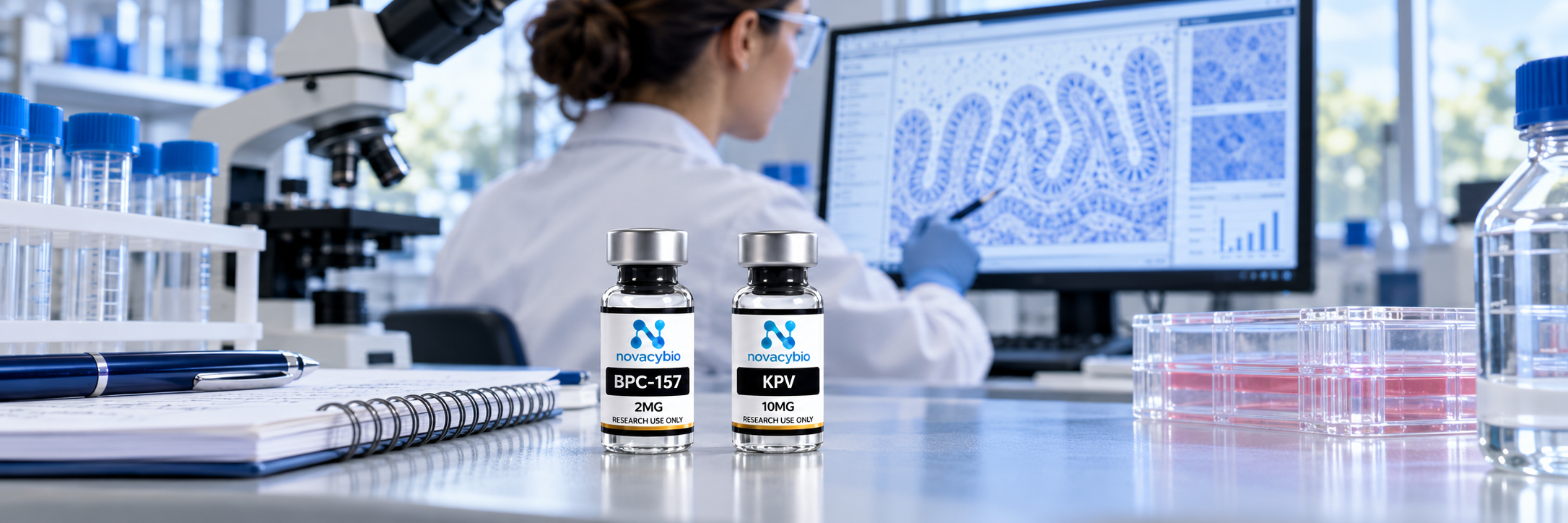
Why do BPC-157 and KPV appear together so often in discussions about gut health?
One reason is that gastrointestinal research involves several connected processes. The condition of the intestinal lining, the behavior of inflammatory signals, and the ability of damaged tissue to recover all influence the same biological environment.
BPC-157 has attracted interest through experiments examining tissue protection, intestinal injury, and healing. KPV has drawn attention through studies of inflammatory signaling in intestinal and immune cells, alongside experimental colitis.
These overlapping interests explain the pairing. They also create a useful question for readers and businesses evaluating peptide materials: what does each peptide contribute to the research discussion?
Understanding those differences is more informative than simply calling them a “gut repair stack.” This article examines their experimental findings and development relevance without providing a personal use protocol.
Gut Health Involves More Than One Biological Process
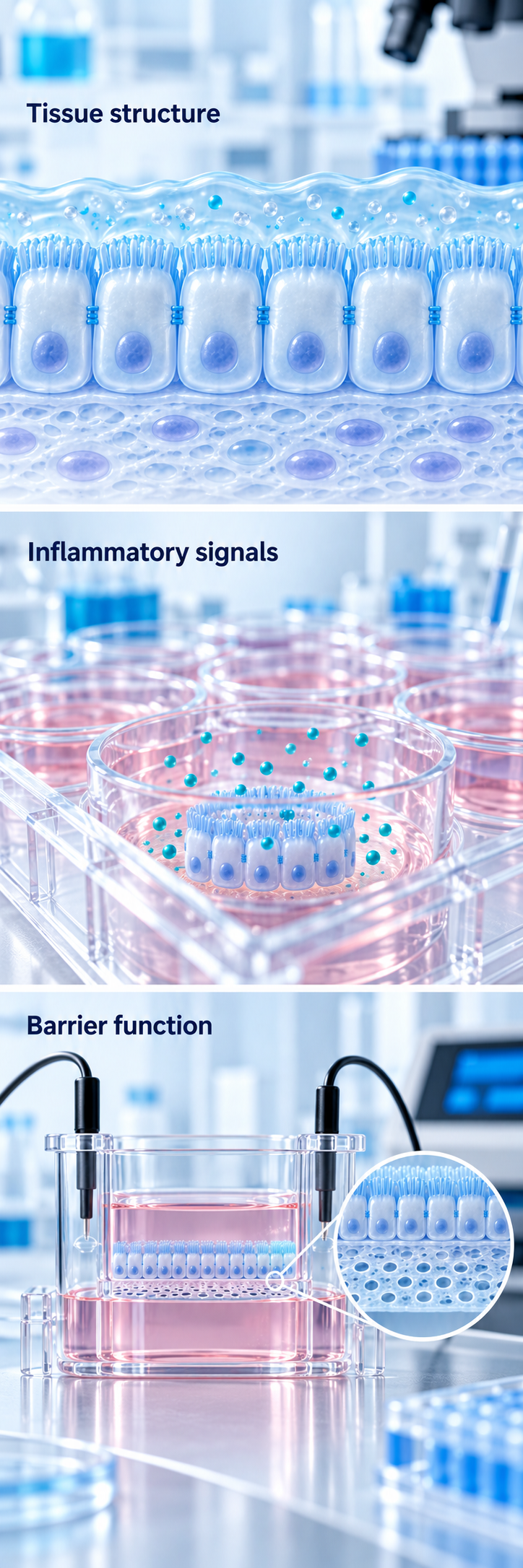
The Intestinal Lining: Tissue Structure and Integrity
The intestinal lining forms an interface between the contents of the digestive tract and the body. Its epithelial cells, mucus, and supporting tissues contribute to protection and normal intestinal function.
Different research settings challenge that system in different ways. A surgically joined intestine, an ulcerated surface, and tissue exposed to restricted blood supply present distinct problems. Measuring recovery in one setting does not automatically answer questions about another.
Inflammatory Signaling: How Cells Coordinate a Response
Inflammation helps organize responses to injury and harmful stimuli. However, persistent or poorly regulated inflammatory activity can accompany tissue damage.
Researchers therefore examine both the signals cells produce and the condition of the tissue. A change in an inflammatory messenger is useful information, but it is not the same measurement as wound closure or restored tissue strength.
Barrier Function: Controlling What Passes Through
The gut barrier regulates movement across the intestinal surface. Connections between neighboring epithelial cells help control this passage.
Human tissue-derived organoid experiments illustrate how researchers can measure barrier changes using electrical resistance and permeability-related assessments under inflammatory conditions. These are functional measurements, rather than general descriptions of how someone’s digestion feels. [1]
“Leaky gut” marketing often compresses these distinctions. Bloating alone does not establish a barrier defect, and improved tissue appearance does not, by itself, prove normalized permeability.
Why BPC-157 Attracts Interest in Gastrointestinal Research
BPC-157 is a 15-amino-acid peptide investigated in several gastrointestinal injury settings. Its appeal in this field comes from experiments that examine tangible tissue outcomes.
Research on Tissue Protection and Healing
A 2007 rat study investigated ileoileal anastomosis healing—recovery at a surgical connection between two sections of the small intestine.
Researchers assessed the connection over the first 14 days using tissue examination and mechanical tests of resistance to leakage. Compared with saline controls, the authors reported improved healing measures, less swelling and inflammatory-cell accumulation, and later increases in tissue formation and epithelial coverage. The treated connections also tolerated greater pressure and volume before leakage. [2]
What makes this interesting is the combination of structural and functional observations. Tissue can look different under a microscope without necessarily becoming mechanically stronger; measuring both helps investigate the quality of recovery.
For development teams, this provides a defined research direction: evaluating whether changes in tissue repair translate into improved performance of an injured intestinal segment.
Interest in Local Blood Flow and Mucosal Integrity
Another rat study examined colonic injury caused by restricted blood supply and subsequent reperfusion—the return of circulation after restriction.
Following experimental local application of BPC-157, researchers reported increased visibility of blood-filled vessels, reappearance of vascular connections, preserved mucosal folds, and smaller pale areas compared with controls. They also examined oxidative-stress and nitric-oxide-related measurements. [3]
These observations connect tissue protection with the local vascular environment. Importantly, rapidly reappearing vessel connections should not be described as proof that entirely new blood vessels formed within minutes.
Together, these studies explain the interest in BPC-157 gut health research: they examine healing and tissue condition under defined experimental challenges. Their findings remain specific to those animal models.
Why KPV Attracts Interest in Intestinal Inflammation
A Small Peptide with a Distinct Research Focus
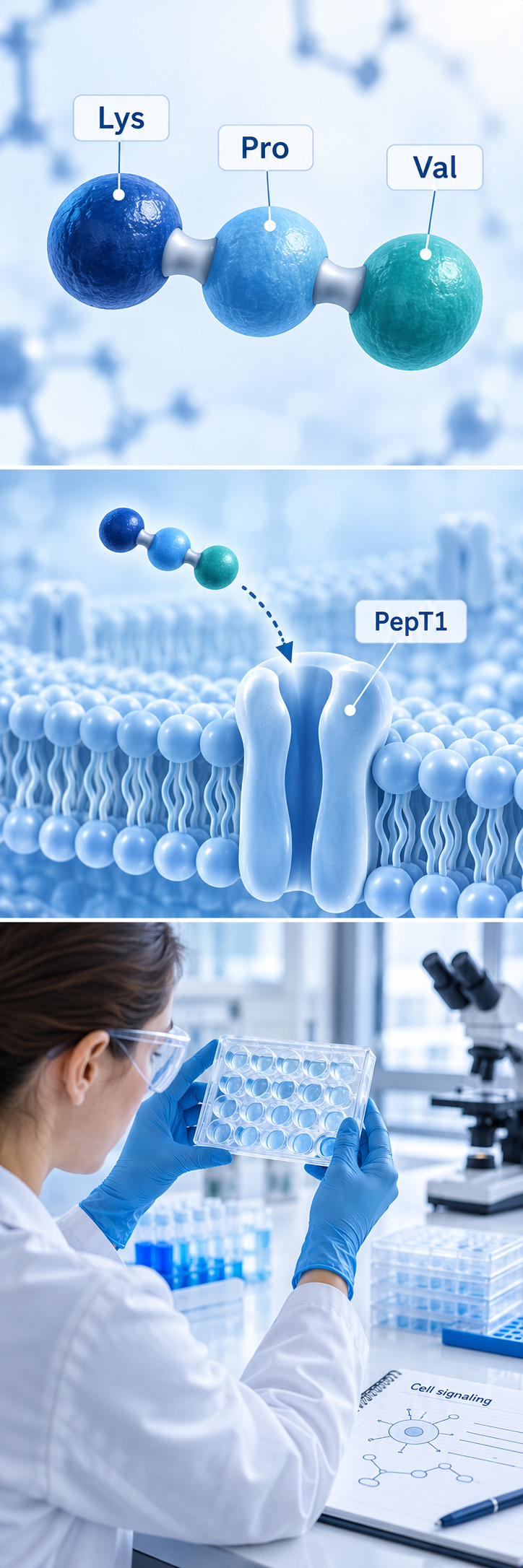
KPV consists of three amino acids: lysine, proline, and valine. Its name comes from their one-letter abbreviations.
The peptide corresponds to the final three amino acids of alpha-melanocyte-stimulating hormone, or α-MSH. Direct KPV experiments are especially relevant here because results for the larger parent peptide cannot automatically be assigned to its shorter fragment.
PepT1 Uptake and Inflammatory Signaling
A 2008 study investigated KPV in human intestinal epithelial cell lines and a human T-cell line.
Researchers found that PepT1, a transporter capable of carrying certain small peptides into cells, mediated KPV uptake. KPV reduced activation of NF-κB and MAPK inflammatory pathways and lowered inflammatory mediator production, including IL-8.
The same study examined chemically induced colitis in mice. In an eight-day DSS experiment with five mice per group, KPV reduced several inflammatory findings; colonic myeloperoxidase activity, an indicator associated with neutrophil accumulation, fell by approximately 50% compared with DSS alone. [4]
These findings connect cellular uptake with downstream inflammatory measurements. That makes KPV interesting for investigating how a short peptide can influence responses inside intestinal and immune cells.
Findings Across Different Inflammation Models
A separate study evaluated KPV in both DSS colitis and immune-cell-transfer colitis in mice. Researchers reported improved weight recovery, fewer inflammatory changes in colon tissue, and reduced myeloperoxidase activity. [5]
Using different models helps explore whether an observation depends on one particular experimental trigger.
This is the central attraction of KPV gut health research: measurable inflammatory responses across cellular and animal systems. Transport into cultured cells, however, does not establish a commercial product’s human oral absorption, clinical effectiveness, or optimal delivery method.
Why Are BPC-157 and KPV Discussed Together?
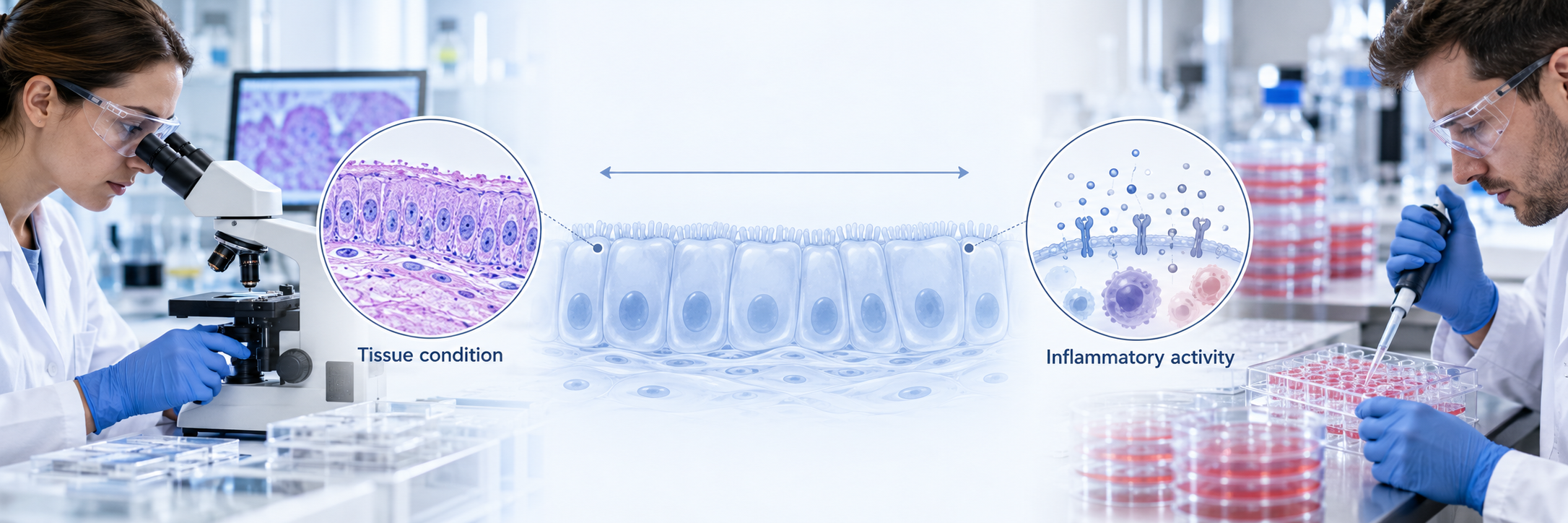
The strongest explanation is that tissue injury and inflammation interact within the same intestinal environment.
An injured surface can change how intestinal contents encounter underlying tissues. Inflammatory cells and their signals can, in turn, influence the conditions in which tissue recovery occurs. Human intestinal ischemia–reperfusion research has documented epithelial lining disruption alongside inflammatory activation, illustrating how closely these processes can connect. [6]
This makes it understandable that readers interested in BPC-157 and KPV encounter both names.
Their experimental literature offers different starting points:
- BPC-157 studies discussed here examine injured tissue, healing, and vascular observations.
- KPV studies discussed here examine cellular inflammatory pathways and outcomes in inflammation models.
The separation is not absolute. The BPC-157 healing experiment included inflammatory-cell observations, while KPV experiments included tissue histology and whole-animal recovery measures.
The value of considering both perspectives is a more complete research framework. A project might ask whether changes in inflammatory activity accompany changes in tissue structure, and whether either translates into improved barrier function.
That is a rationale for investigation—not evidence that combining the two produces a stronger effect.
BPC-157 and KPV at a Glance
| Comparison | BPC-157 | KPV |
|---|---|---|
| Structure | 15-amino-acid peptide | Three-amino-acid peptide |
| Main focus in this article | Gastrointestinal tissue protection and injury recovery | Intestinal inflammatory signaling |
| Representative settings | Rat intestinal anastomosis and ischemic colonic injury | Intestinal and immune-cell experiments; mouse colitis |
| Examples of measurements | Histology, resistance to leakage, vascular appearance | Signaling activity, inflammatory mediators, tissue inflammation |
| Development interest | Connecting structural recovery with functional tissue outcomes | Connecting cellular uptake with inflammatory responses |
| Interpretation boundary | Surgical and ischemic models differ from everyday digestive complaints | Cell and mouse findings do not establish human symptom benefits |
The table summarizes research emphasis. It does not identify a universally better peptide for every condition grouped under “gut health.”
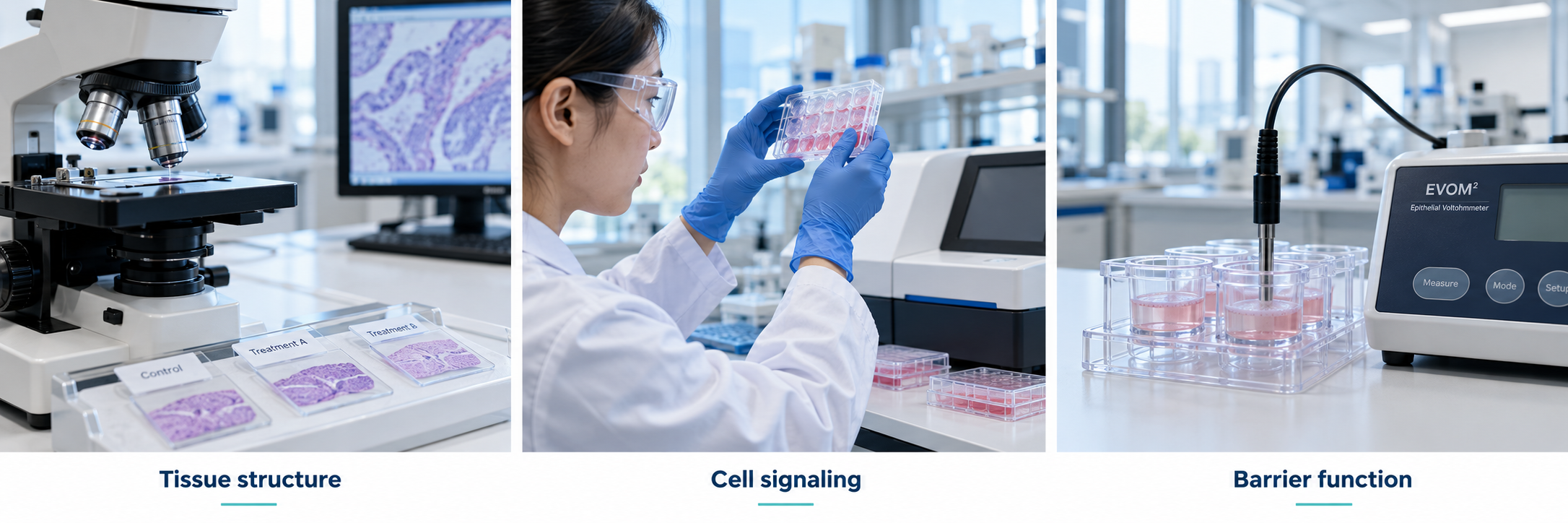
Why Endpoint Selection Matters
For businesses evaluating a research concept, choosing the endpoint is more useful than relying on a broad benefit label.
A tissue-recovery project might prioritize epithelial coverage or mechanical integrity. An inflammatory-signaling project might examine pathway activation and mediator production. A barrier-focused project would need direct permeability-related measurements.
Those choices affect the experimental model, comparison conditions, and information required about the material. They also determine which claims the eventual results could reasonably support.
This is where understanding product differences becomes commercially useful: it helps a buyer or development team define a specific project rather than purchase around an undefined “gut support” promise.
What Would Demonstrate a Benefit from Combining Them?
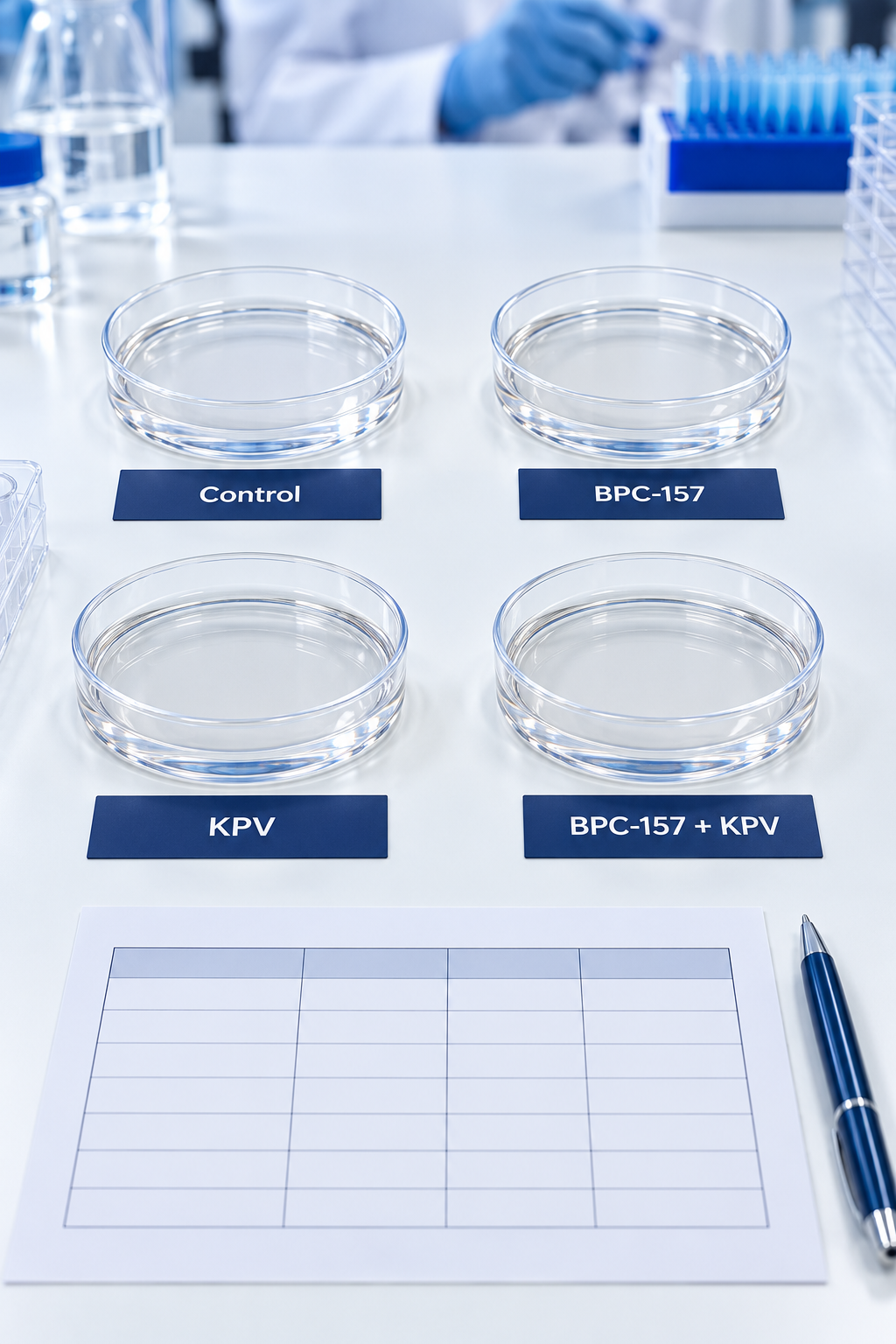
A convincing combination study would distinguish four conditions:
- A suitable control.
- BPC-157 alone.
- KPV alone.
- BPC-157 and KPV together.
The conditions should use the same model, assessment schedule, and relevant endpoints. Otherwise, differences between separate experiments could be mistaken for a combination effect.
The study would then ask whether the combination adds a meaningful benefit beyond either component. Demonstrating synergy would require an appropriate analysis of interaction; a better result than one component alone is not sufficient by itself.
This review did not identify a published controlled study establishing an added gastrointestinal benefit from the BPC-157–KPV combination.
For human applications, further questions would include clinical effectiveness, safety, exposure, and the identity of the actual preparation. Separate positive findings cannot answer those questions for a combined product.
Frequently Asked Questions

Are BPC-157 and KPV the Same Type of Peptide?
Both are short amino-acid chains, but they are distinct materials. BPC-157 contains 15 amino acids, while KPV contains three. Their research backgrounds and the experiments highlighted here also differ. One should not be substituted for the other simply because both appear in gastrointestinal discussions.
Is BPC-157 or KPV Better for Gut Health?
“Gut health” is too broad for a meaningful universal ranking. The answer depends on whether the question concerns tissue injury, inflammatory signaling, permeability, or a specific clinical outcome. The separate studies discussed here do not provide a direct comparison under equivalent conditions.
Does Intestinal Inflammation Research Prove Benefits for Bloating or IBS?
No. Changes in inflammatory pathways or experimental colitis do not directly establish improvement in bloating or irritable bowel syndrome. Those outcomes require studies in the relevant human population, using appropriate symptom assessments and a suitable comparison group.
Does Taking BPC-157 and KPV Together Work Better?
The available individual findings do not establish that conclusion. A combined preparation introduces another research question, including its interaction, delivery, and safety. Personal experiences cannot reliably determine whether any change came from one component, the combination, or other factors.
Two Research Perspectives on a Complex System
BPC-157 and KPV attract gastrointestinal research interest for concrete reasons: experiments have examined tissue healing and vascular observations with BPC-157, and cellular inflammatory responses and mouse colitis outcomes with KPV.
Their shared relevance comes from the relationship between intestinal tissue condition and inflammation. Understanding that connection helps define more useful research questions while preserving the differences between the materials.
Explore Novacybio’s BPC-157 and KPV research product specifications, or contact us for available batch documentation and supply information.
References
- Interleukin-27 Regulates the Function of the Gastrointestinal Epithelial Barrier in a Human Tissue-Derived Organoid Model. Biology. 2022;11(3):427. doi:10.3390/biology11030427. Source
- Stable Gastric Pentadecapeptide BPC 157 in Trials for Inflammatory Bowel Disease (PL-10, PLD-116, PL14736, Pliva, Croatia) Heals Ileoileal Anastomosis in the Rat. Surgery Today. 2007. doi:10.1007/s00595-006-3498-9. Source
- Duzel A, et al. Stable gastric pentadecapeptide BPC 157 in the treatment of colitis and ischemia and reperfusion in rats: New insights. World Journal of Gastroenterology. 2017;23(48):8465–8488. doi:10.3748/wjg.v23.i48.8465. Source
- Dalmasso G, et al. PepT1-mediated tripeptide KPV uptake reduces intestinal inflammation. Gastroenterology. 2008;134(1):166–178. doi:10.1053/j.gastro.2007.10.026. Source
- Kannengiesser K, et al. Melanocortin-derived tripeptide KPV has anti-inflammatory potential in murine models of inflammatory bowel disease. Inflammatory Bowel Diseases. 2008;14(3):324–331. doi:10.1002/ibd.20334. Source
- Grootjans J, et al. Human intestinal ischemia-reperfusion-induced inflammation characterized: experiences from a new translational model. American Journal of Pathology. 2010;176(5):2283–2291. doi:10.2353/ajpath.2010.091069. Source