
Blog
SNAP-8 Peptide: What Does a “Botox-Like” Skincare Claim Mean?



A skincare ingredient described as “Botox-like” immediately raises an appealing question: could a topical product help soften expression lines?
The SNAP 8 peptide, commonly associated with the ingredient name Acetyl Octapeptide-3, attracts attention for precisely this reason. Its development focuses on signaling involved in facial expression, giving it a distinct place in the discussion of wrinkle-focused skincare. [1]
For skincare brands, ingredient buyers, and product developers, the useful questions go beyond the nickname. What improvements have been measured? Which findings concern the ingredient, and which concern a finished formula? And what makes SNAP-8 worth evaluating for a skincare project?
What Is SNAP-8 Peptide?
SNAP-8 is a trade name associated with a synthetic, eight-amino-acid peptide commonly identified in cosmetic ingredient documentation as Acetyl Octapeptide-3. The ingredient name, a supplier’s commercial preparation, and a finished skincare product describe different things. [1]
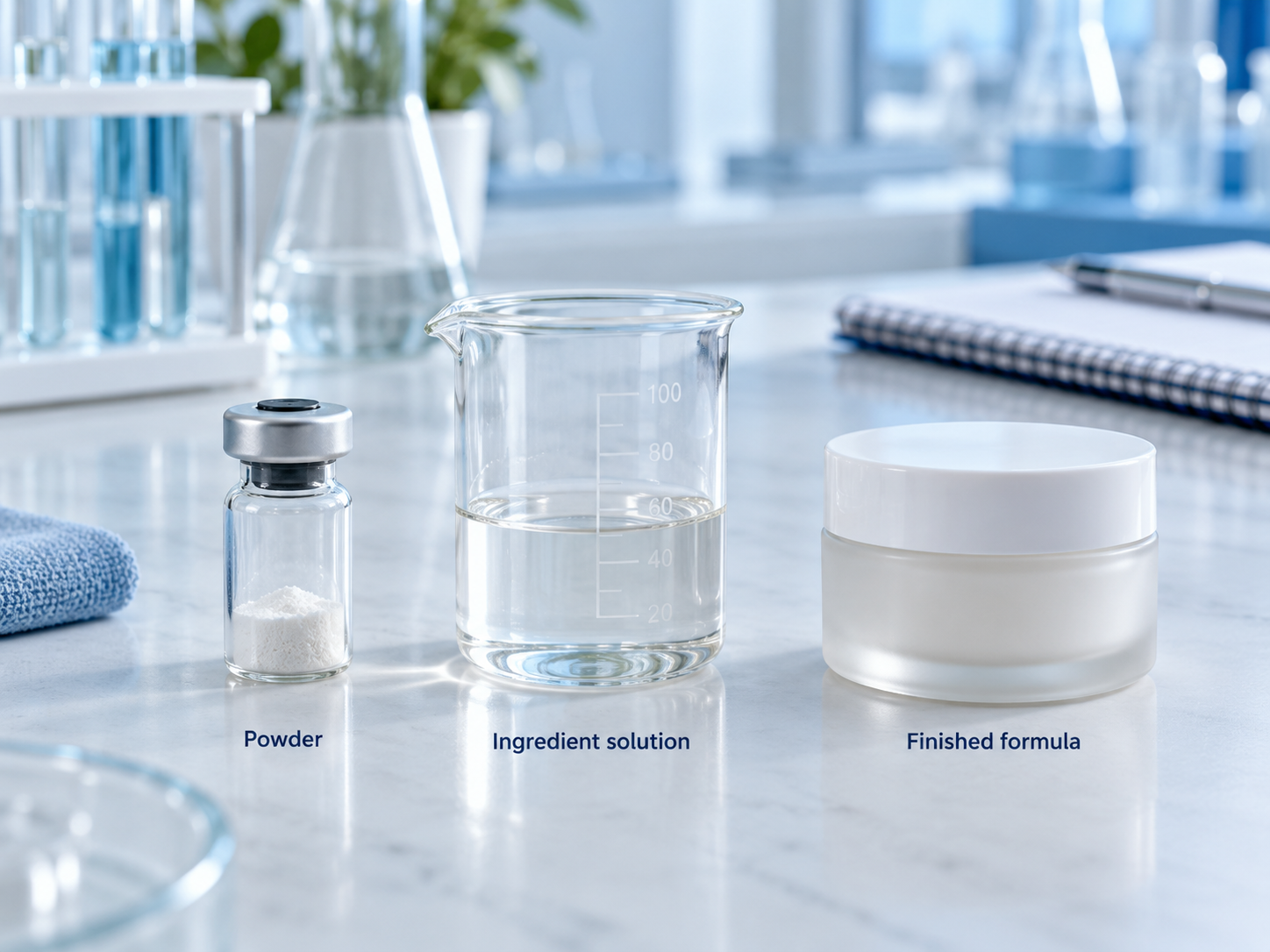
This distinction matters when comparing materials. A powder, a diluted ingredient solution, and a serum containing that solution can have very different compositions.
For a business evaluating SNAP-8, the starting point is therefore the actual ingredient identity and supplied form. The skincare concept comes next: what appearance benefit will the finished product be designed and tested to deliver?
Why Expression Lines Are a Useful Starting Point
Expression lines become noticeable when the face moves—for example, around the eyes during smiling or across the forehead when raising the eyebrows. Some lines remain visible when the face is relaxed, as skin changes accumulate over time.
Wrinkles also reflect factors beyond facial movement, including sun exposure, changes in skin structure, and hydration. A useful product brief should therefore identify the intended concern more precisely than “anti-aging.”
For example:
- Is the goal to reduce the measured depth of eye-area wrinkles?
- Improve the appearance of fine surface lines?
- Make skin look smoother in standardized photographs?
These are related but different outcomes. Defining the target makes ingredient selection and finished-product testing more meaningful.
The Research Idea Behind SNAP-8
SNAP-25 is a protein involved in the SNARE complex, part of the machinery cells use to release chemical messengers. SNAP-8 was designed around a portion of SNAP-25, with the proposed aim of interfering with that complex’s assembly. Supplier laboratory testing examined this process and messenger release. [1]
That provides the rationale for expression-line research. Whether the concept produces a visible skincare benefit depends on additional steps:
Ingredient activity → delivery in a formulation → exposure at the relevant site → measurable changes in skin appearance

SNAP-8 Peptide Benefits: What Has Been Measured?
The most relevant potential benefit is a reduction in the appearance of expression-related wrinkles. Human evaluations provide reasons to investigate this further, although the tested preparations need to remain attached to the results.
Wrinkle Depth in a Supplier-Reported Cream Evaluation
Lipotec’s technical dossier describes 17 healthy women evaluated over 28 days. Researchers measured eye-area skin replicas using confocal laser scanning microscopy after use of a cream containing 10% of the commercial SNAP-8 solution.
Its summary graph reports a 34.98% reduction in wrinkle depth. This was a small, supplier-reported evaluation; the document’s comparator results came from an earlier test rather than a clearly documented concurrent control group. The 10% figure also describes the ingredient solution added to the cream—not 10% pure peptide. [2]
The commercially relevant point is that the evaluation used an objective skin-surface measurement. It offers a concrete starting point for further formula development and validation.

Wrinkle Appearance in a Published Patch Study
A 2024 study involving 24 healthy participants evaluated a dissolving microneedle patch containing Acetyl Octapeptide-3, hyaluronic acid, a vitamin C derivative, and sodium cyclic lysophosphatidic acid.
Over 28 days, participants received the active patch on one eye area and a hyaluronic-acid-only comparator patch on the other. Researchers assessed wrinkles using skin-surface measurements, including replica analysis and three-dimensional imaging. The active formulation showed greater wrinkle improvement than the comparator.
This was a published study with manufacturer-affiliated authors. It supports the performance of the tested multi-ingredient patch, while leaving the individual contribution of SNAP-8 unresolved. [3]

Why These Findings Matter for Product Development
Together, these evaluations suggest a useful development direction: formulas designed around measurable changes in wrinkle appearance.
They also illustrate how a brand can turn ingredient interest into a stronger product proposition. Rather than relying entirely on a recognizable peptide name, a development program can establish its own evidence for:
- Wrinkle depth or surface roughness.
- Visible changes in standardized photography.
- Consumer-perceived smoothness.
- Tolerability of the finished formula.
These are possible testing objectives, not additional established benefits of SNAP-8. Their value is that they connect a skincare concept to outcomes a customer can understand.
SNAP-8 vs. Botox: What Does “Botox-Like” Mean?
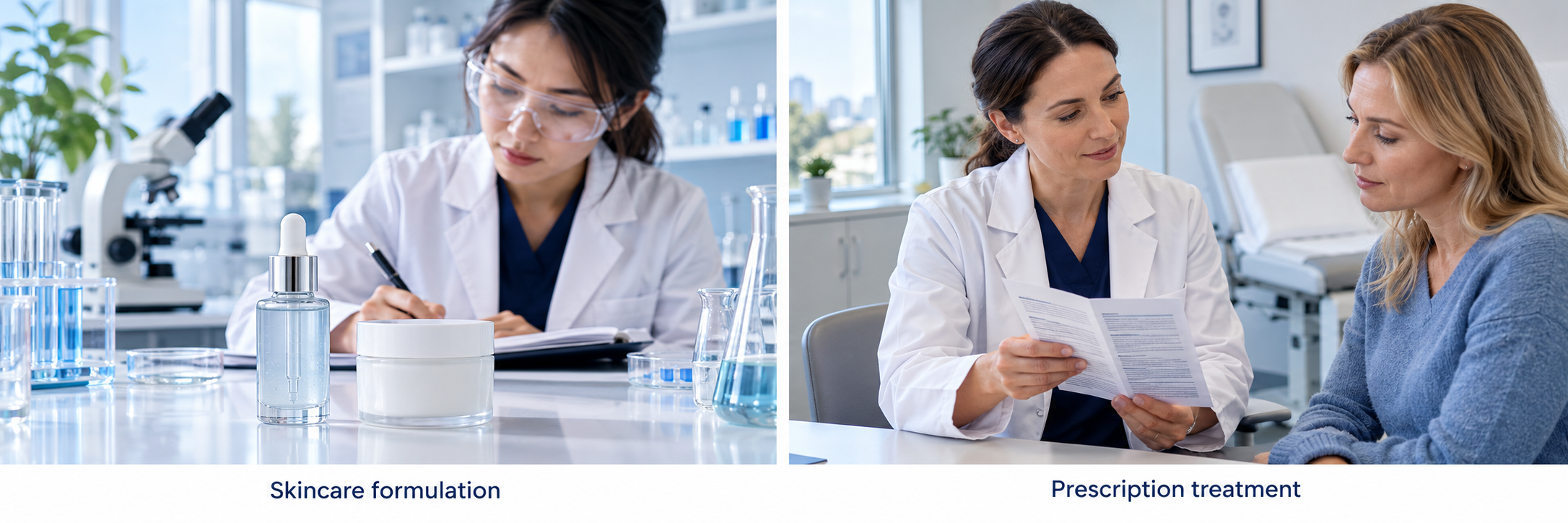
The comparison comes from an interest in signaling associated with muscle activity. It does not establish that the ingredients act identically or produce equivalent results.
BOTOX Cosmetic contains onabotulinumtoxinA. Its official prescribing information describes entry into nerve terminals and cleavage of SNAP-25, inhibiting acetylcholine release and reducing local muscle activity. [4]
| Comparison | SNAP-8-related skincare research | BOTOX Cosmetic |
|---|---|---|
| Material | Synthetic short peptide | Botulinum toxin type A product |
| Mechanistic description | Proposed interference with SNARE assembly | Enzymatic cleavage of SNAP-25 |
| Delivery studied | Particular creams and formulated patches | Prescription treatment administered by injection |
| Evidence applies to | The specific material or formula tested | The approved medicine and its labeled uses |
The sources discussed here do not establish head-to-head equivalence.
For a skincare brand, a more useful proposition is an expression-line-focused formula with its own performance data. That gives customers a specific benefit to evaluate without promising the same outcome as a medical treatment.
Why Formulation Matters
Delivery Is Part of Performance
An ingredient’s behavior in a laboratory system does not tell the whole story of how it performs on skin.
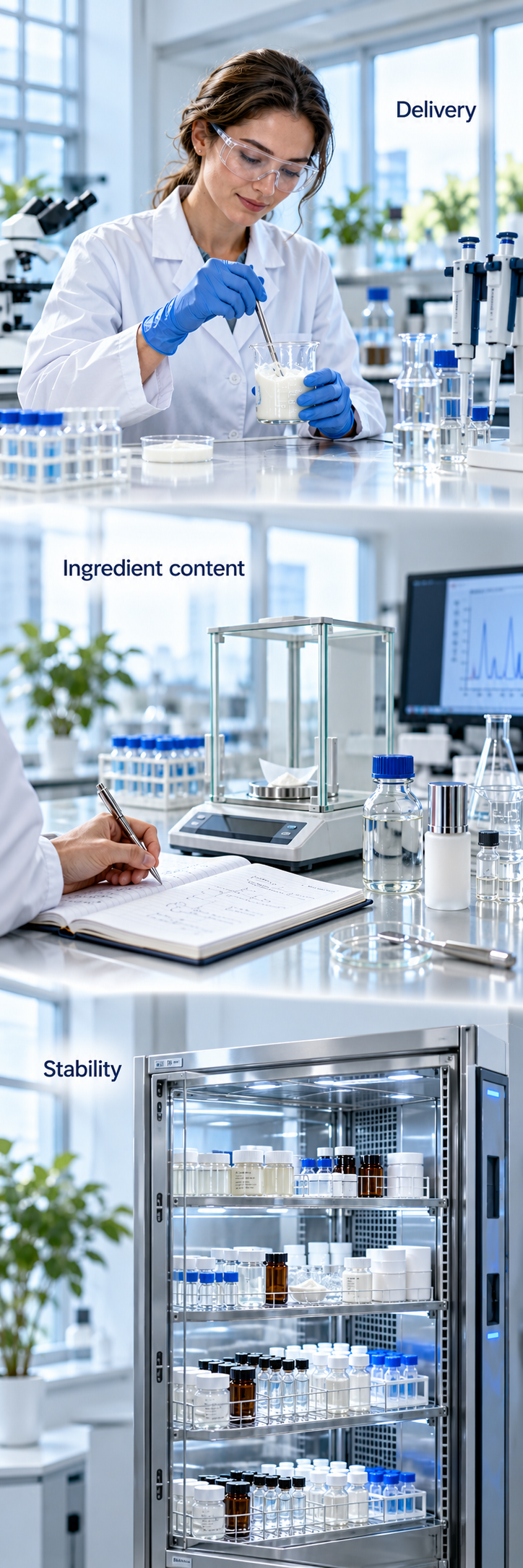
The skin barrier, the vehicle carrying the ingredient, and the delivery format all influence exposure. A conventional cream and a dissolving microneedle patch are substantially different systems; results from one should not become automatic claims for the other.
For developers, this makes formulation a source of potential differentiation. Selecting the peptide is one decision. Demonstrating that the finished product delivers its intended appearance benefit is another.
Ingredient Solution Percentage and Peptide Content Are Different
A headline percentage can describe a commercial blend containing water, preservatives, and peptide.
When reviewing a formula or supplier document, distinguish between:
- The amount of the commercial ingredient preparation added.
- The amount of peptide within that preparation.
- The resulting peptide content in the finished product.
A larger percentage on the front of a product does not, by itself, settle which formula performs better.
Ingredient-list position cannot provide the missing calculation either. Under U.S. cosmetic labeling rules, ingredients present at 1% or less may generally appear in any order after ingredients above 1%. [5]
Stability and Compatibility Need Formula-Specific Evaluation
A development project should also establish whether the peptide remains suitable throughout the intended product life.
Relevant questions include changes during storage, interaction with the formulation environment, and performance in the selected packaging. These require information about the actual material and formula; a general peptide description cannot establish universal compatibility.
For buyers, this is where technical information becomes commercially useful: it helps determine whether a candidate material fits the product being developed.
SNAP-8 and GHK-Cu: Different Skincare Research Interests
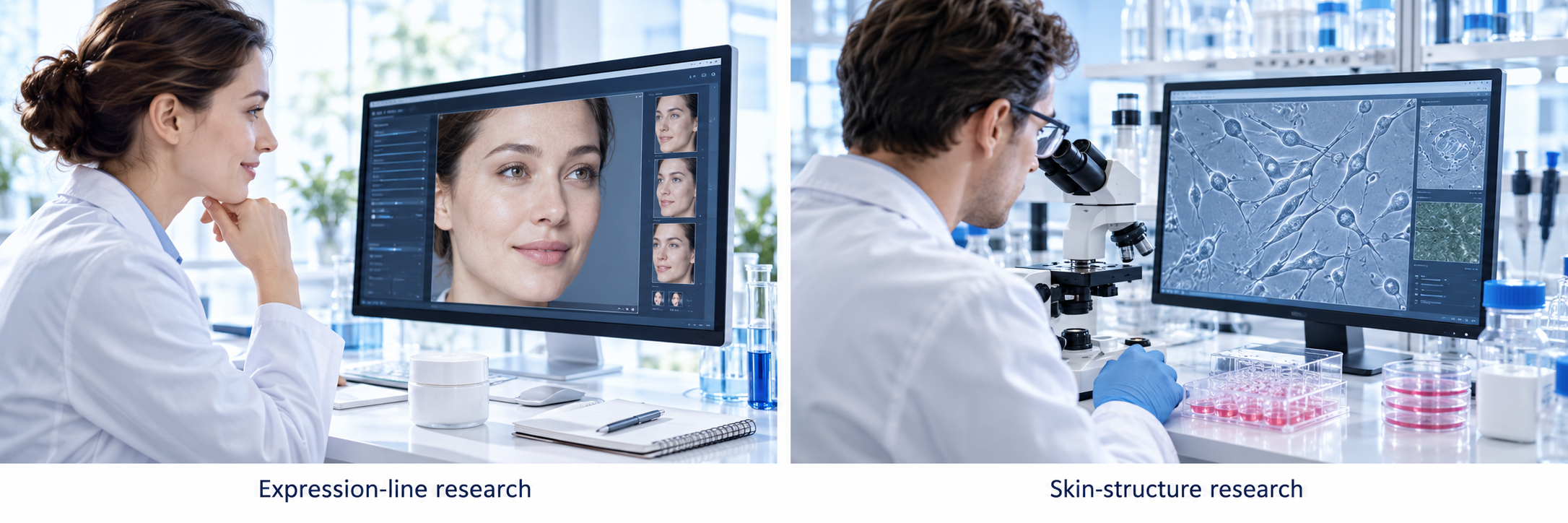
SNAP-8 and GHK-Cu appear in skincare discussions for different reasons.
The SNAP-8 concept centers on expression-related signaling. GHK-Cu has been investigated in areas including extracellular-matrix biology; an original cell-culture study reported increased collagen synthesis in fibroblasts exposed to GHK-Cu. That finding concerns cultured cells, rather than proof of a particular serum’s performance. [6]
For product planning, the distinction helps define the development brief. An expression-line concept and a skin-structure concept may lead to different ingredient choices, formulations, and measurements. Their different mechanisms alone do not establish that combining them produces a better product.
Frequently Asked Questions
Is SNAP-8 the Same as Botox?
No. They are different materials, with different delivery formats and evidence. “Botox-like” is a comparison used in marketing and mechanism discussions—not proof of equivalent results.
What Does Research Suggest About SNAP-8 and Expression Lines?
The available evaluations provide encouraging wrinkle-appearance findings, including supplier cream testing and published research on a multi-ingredient patch. Each result needs to be interpreted within its own formulation and study design.
Is Ingredient Research Enough to Predict a Serum’s Results?
It can guide development, but predicting a serum’s performance also requires information about the complete formula, delivery, stability, and finished-product testing.
Can an Ingredient List Tell You How Much SNAP-8 Is Present?
Usually, it identifies ingredients without stating their exact concentrations. It also does not reveal how much peptide was present in a diluted commercial preparation.
Does “Botox-Like” Mean the Same Results Without Injections?
The phrase does not establish that conclusion. A topical product’s value is better demonstrated through evidence of its own visible skincare results.

Why SNAP-8 Deserves a Closer Look
SNAP-8 offers a focused direction for skincare development: connecting an expression-line concept with measurable wrinkle-appearance outcomes.
Its appeal for brands and ingredient buyers lies in that specificity. A well-defined development brief, an appropriate formulation, and finished-product testing can turn interest in the ingredient into a more credible commercial proposition.
Explore Novacybio’s SNAP-8 product specifications, or contact us to discuss bulk purchasing, raw material requirements, and business procurement. Confirm the available material’s grade and suitability for your intended application.
References
- Acetyl Octapeptide-3. Ingredient technical summary. PDF hosted by Synergie Skin. Source PDF
- Lipotec. SNAP-8: An Anti-Aging Peptide. Technical dossier, code PD017, revision 3, July 2005. Supplier document; linked copy hosted by a third party. Source PDF
- Shin JY, et al. Clinical Safety and Efficacy Evaluation of a Dissolving Microneedle Patch Having Dual Anti-Wrinkle Effects With Safe and Long-Term Activities. Annals of Dermatology. 2024;36(4):215–224. doi:10.5021/ad.23.136. Source
- U.S. Food and Drug Administration. BOTOX Cosmetic (onabotulinumtoxinA) prescribing information. 2024 label cited in this article. Source PDF
- U.S. Food and Drug Administration. Cosmetics Labeling Guide. Ingredient declaration and order of listing. Source
- Maquart FX, et al. Stimulation of collagen synthesis in fibroblast cultures by the tripeptide-copper complex glycyl-L-histidyl-L-lysine-Cu2+. FEBS Letters. 1988. Source