
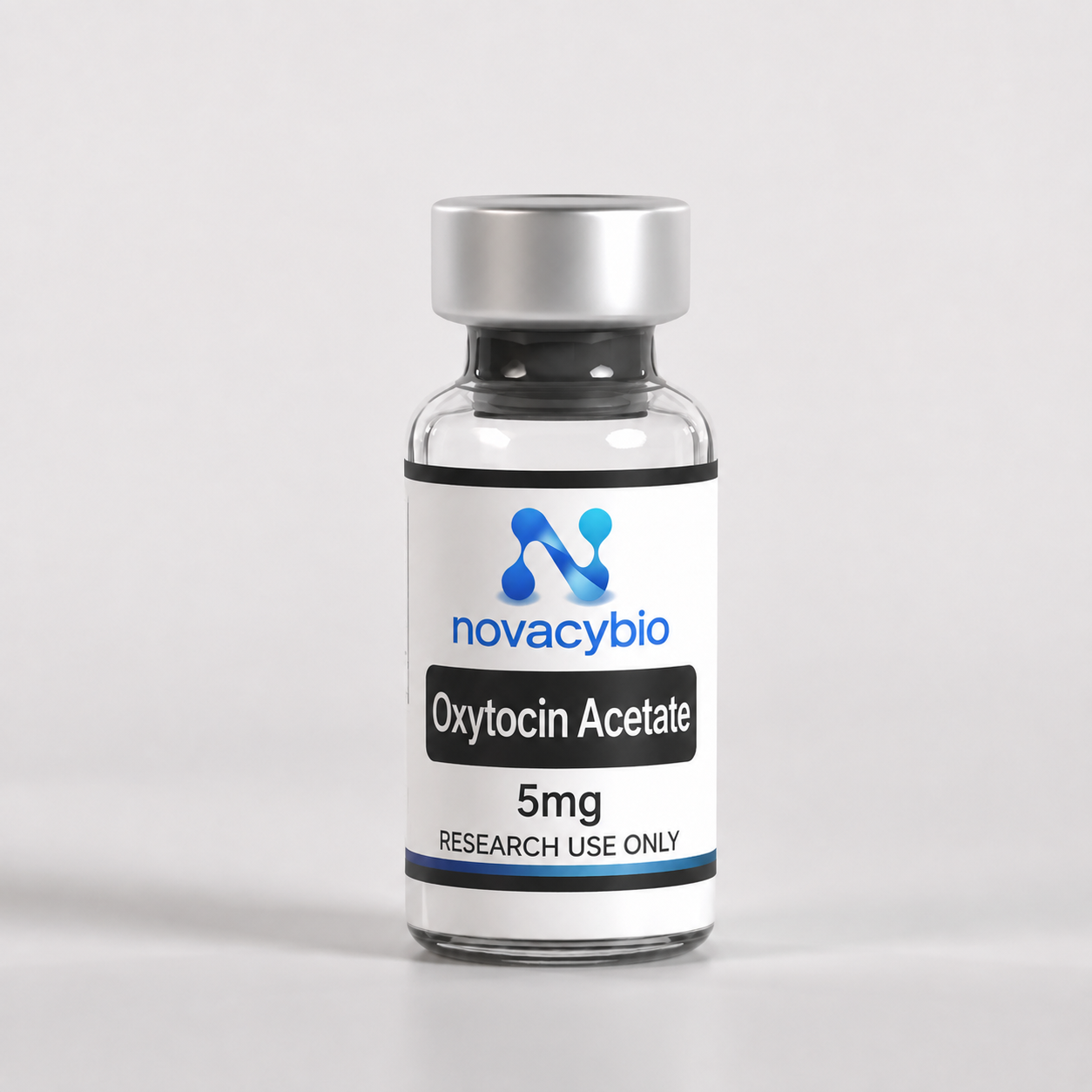
Oxytocin
原价为:$59.99。$49.99当前价格为:$49.99。
High-Purity Oxytocin Acetate Research Peptide for Neuroscience, Neuroendocrine and Receptor Signaling Studies
Oxytocin Acetate Research Peptide
High-Purity Research Grade Oxytocin Peptide for Scientific Applications
1. What is Oxytocin?(Identity Positioning)
Oxytocin Acetate is a synthetic nonapeptide neurohormone consisting of nine amino acids. It is structurally identical to endogenous oxytocin, a naturally occurring peptide hormone primarily synthesized in the hypothalamus and released from the posterior pituitary gland.
As a research peptide, Oxytocin Acetate is widely studied for its role in neuroendocrine signaling, social behavior modulation, reproductive biology, and central nervous system research.
Oxytocin belongs to the class of neuropeptide hormones and functions mainly through activation of the oxytocin receptor (OXTR), a G protein-coupled receptor (GPCR) expressed in various peripheral tissues and brain regions.
Product Identity
-
Peptide Name: Oxytocin Acetate
-
Peptide Type: Synthetic cyclic nonapeptide
-
Amino Acid Length: 9 amino acids
-
Molecular Formula: C43H66N12O12S2
-
Molecular Weight: Approximately 1007.2 Da
-
Primary Research Target: Oxytocin receptor (OXTR) signaling pathway
2. Peptide Category Positioning(肽类别定位)
Oxytocin belongs to the following peptide categories:
Neuropeptide Hormone
Oxytocin is classified as a neuropeptide because it functions as both:
-
A peripheral hormone
-
A central nervous system signaling molecule
Cyclic Peptide
The peptide contains an intramolecular disulfide bond between two cysteine residues, creating a characteristic cyclic structure that contributes to receptor binding activity.
Neuroendocrine Regulatory Peptide
Research focuses on its involvement in:
-
Hypothalamic signaling
-
Social cognition pathways
-
Emotional processing
-
Reproductive physiology
-
Stress response mechanisms
Unlike growth hormone secretagogues or tissue repair peptides, Oxytocin is primarily positioned as a neurobehavioral and neuroendocrine research peptide.
3. Research Logic(研发逻辑)
The research interest behind Oxytocin is based on understanding how peptide signaling regulates complex biological communication systems.
Research Mechanism Overview
Oxytocin interacts with:
Oxytocin Receptor (OXTR)
↓
Activation of GPCR signaling pathways
↓
Regulation of intracellular calcium signaling and downstream neuronal responses
↓
Influence on:
-
Neural communication
-
Social cognition networks
-
Stress-related pathways
-
Reproductive physiology
Research programs commonly investigate Oxytocin signaling in:
-
Neurobiology
-
Behavioral neuroscience
-
Endocrinology
-
Reproductive science
-
Psychiatric research models
4. Research Findings(研究证据)
Social Behavior and Cognitive Research
Scientific studies have investigated Oxytocin’s involvement in:
-
Social recognition
-
Interpersonal bonding mechanisms
-
Emotional processing
-
Social memory formation
Research suggests that oxytocin signaling may influence neural circuits associated with social interaction, including areas such as:
-
Amygdala
-
Prefrontal cortex
-
Hippocampus
-
Nucleus accumbens
Stress Response Research
Oxytocin has been studied for its relationship with:
-
Hypothalamic-pituitary-adrenal (HPA) axis regulation
-
Stress adaptation mechanisms
-
Anxiety-related behavioral models
Research models suggest potential interactions between oxytocin signaling and stress-response pathways.
Autism Spectrum Research
Oxytocin has been investigated in neuroscience research related to:
-
Social communication mechanisms
-
Emotional recognition
-
Social cognition pathways
Current findings remain under investigation, with ongoing studies evaluating receptor signaling, individual response differences, and therapeutic research potential.
Reproductive Biology Research
Oxytocin remains one of the most extensively studied peptides in:
-
Uterine contraction mechanisms
-
Lactation physiology
-
Maternal behavior research
5. Research Applications(应用场景)
Oxytocin Acetate is commonly used in laboratory research areas including:
1. Neuroscience Research
Applications include:
-
Neural signaling studies
-
Brain receptor pathway research
-
Neuroendocrine communication studies
2. Social Cognition Research
Used for investigating:
-
Social interaction mechanisms
-
Emotional recognition pathways
-
Behavioral neuroscience models
3. Stress and Anxiety Research
Research applications include:
-
Stress-response models
-
Neurochemical interaction studies
-
Behavioral regulation research
4. Reproductive Biology Research
Applications include:
-
Hormonal signaling studies
-
Uterine physiology research
-
Lactation pathway investigations
5. Pharmacological Research
Oxytocin is studied in:
-
GPCR receptor research
-
Peptide-receptor interaction studies
-
Neuropharmacology development
6. Safety Profile(安全性分析)
Oxytocin Acetate is supplied as a research-grade peptide material intended exclusively for laboratory investigation.
Research considerations include:
-
Oxytocin signaling can influence multiple physiological systems.
-
Biological responses may vary depending on experimental models, dosage parameters, and administration methods.
-
Appropriate laboratory handling procedures should be followed.
Potential research-related considerations include:
-
Receptor-mediated physiological effects
-
Cardiovascular response pathways
-
Smooth muscle signaling pathways
-
Neuroendocrine interactions
Researchers should evaluate experimental protocols according to institutional guidelines.
7. Final Product Positioning(最终产品定位)
Oxytocin Acetate Research Peptide
A premium research-grade neuropeptide designed for:
-
Neuroscience laboratories
-
Pharmacology research
-
Endocrine research programs
-
Behavioral science studies
-
Peptide receptor research
Key Positioning:
High-purity synthetic oxytocin peptide for non-clinical scientific research applications.
Product advantages:
✔ Synthetic peptide manufacturing
✔ High analytical purity
✔ Batch-specific documentation
✔ Suitable for academic and industrial research programs
✔ Professional peptide supply chain support
8. Quality Documentation(质量文件)
Each research peptide batch can be supported with analytical documentation including:
Certificate of Analysis (COA)
Provides:
-
Product identification
-
Batch number
-
Purity specification
-
Manufacturing information
-
Quality testing results
HPLC Report
High-performance liquid chromatography analysis confirms:
-
Peptide purity profile
-
Chromatographic characteristics
-
Batch consistency
Mass Spectrometry Analysis
Mass spectrometry verification provides:
-
Molecular weight confirmation
-
Peptide identity validation
-
Structural consistency assessment
Batch Documentation
Available documentation may include:
-
Batch records
-
Manufacturing traceability
-
Quality control records
-
Analytical testing information
9. Storage Information(储存信息)
Recommended storage conditions:
-
Store in a dry and temperature-controlled environment
-
Keep protected from direct light exposure
-
Avoid repeated freeze-thaw cycles
-
Store according to product-specific handling instructions
For long-term peptide stability:
-
Keep sealed until use
-
Maintain appropriate laboratory storage conditions
-
Follow institutional peptide handling procedures
10. Research Disclaimer(科研免责声明)
For research use only.
Not intended for human consumption.
Not intended for clinical or diagnostic use.
Oxytocin Acetate is supplied exclusively as a research reagent for laboratory and scientific investigation. It is not approved, marketed, or supplied as a pharmaceutical product, dietary supplement, or therapeutic compound.
11. FAQ(B2B SEO Questions)
1. What is Oxytocin Acetate research peptide?
Oxytocin Acetate is a synthetic cyclic nonapeptide used in scientific research involving neuroendocrine signaling, oxytocin receptor pathways, and behavioral neuroscience.
2. What category of peptide does Oxytocin belong to?
Oxytocin belongs to the neuropeptide hormone category and is classified as a cyclic nonapeptide involved in hormone and neural signaling research.
3. What is Oxytocin Acetate used for in research?
Oxytocin Acetate is commonly studied in neuroscience, reproductive biology, pharmacology, social behavior research, and receptor signaling studies.
4. How does Oxytocin interact with biological systems?
Oxytocin primarily functions through activation of the oxytocin receptor (OXTR), a GPCR involved in cellular signaling pathways.
5. What quality documents are available for Oxytocin peptide?
Research peptide suppliers typically provide COA, HPLC analysis, mass spectrometry reports, and batch documentation to verify product quality and identity.
6. How should Oxytocin Acetate be stored?
Oxytocin Acetate should be stored under controlled laboratory conditions according to supplier recommendations to maintain peptide stability.
7. Is Oxytocin Acetate intended for human use?
No. Oxytocin Acetate supplied as a research peptide is intended exclusively for laboratory research and is not intended for human consumption or clinical use.
8. Why choose a professional Oxytocin Acetate research peptide supplier?
Professional peptide suppliers provide analytical verification, batch traceability, quality documentation, and reliable supply solutions for academic and industrial research organizations.
相关产品
评价
目前还没有评价